

finding your center when there is no ground
starting an equanimity practice

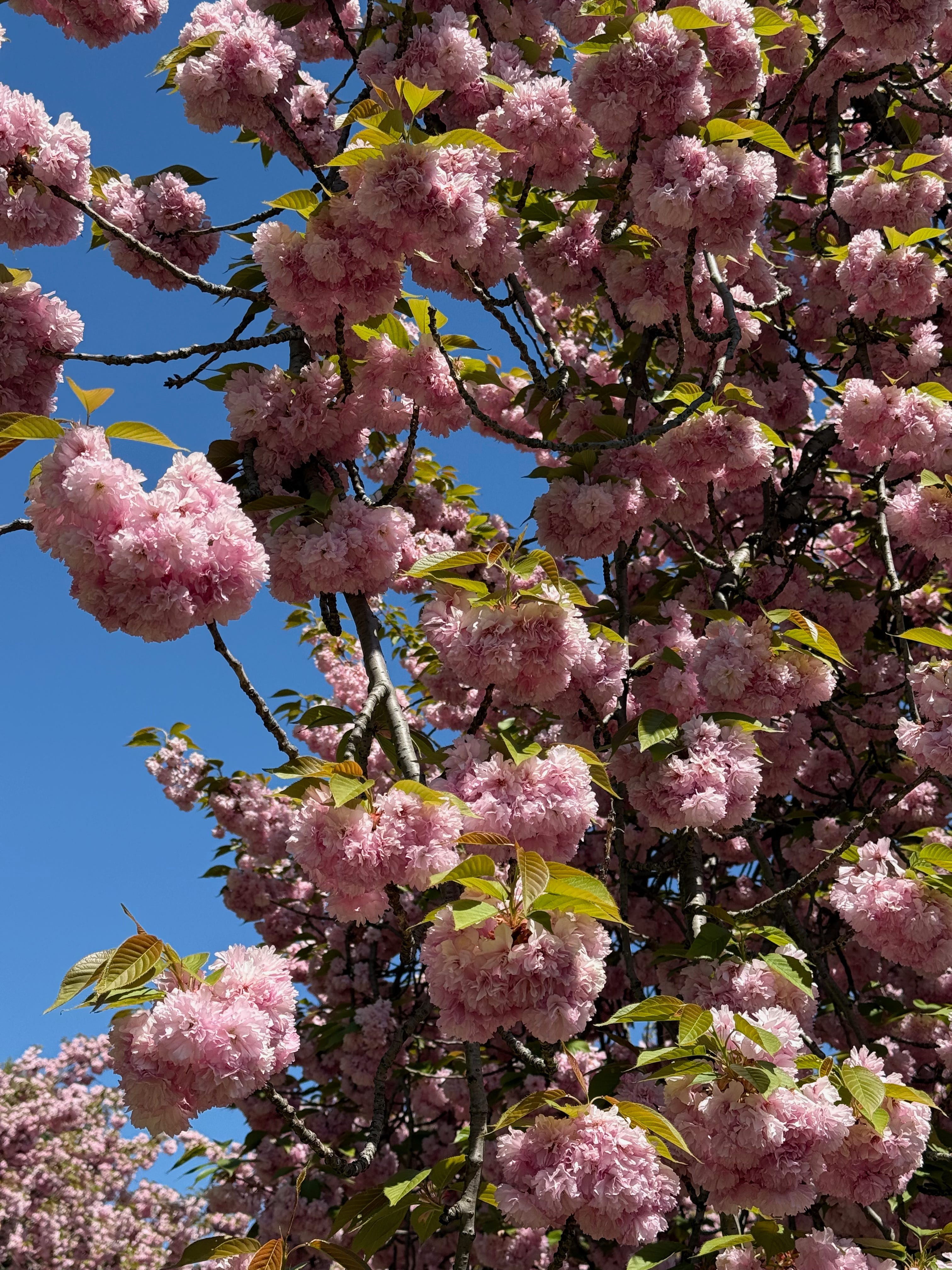
dear friends,
It’s April. Spring’s officially here. This is the season of new beginnings, and even if the world doesn’t seem to be in step with the cherry blossoms, I’m starting something new: a deep dive into the practice of equanimity. And when I say new, I mean new. There is no psychological trait, personality characteristic, or state of being that could be more foreign to my natural tendencies than equanimity is. I’m a person who swings between extremes: exuberant then deeply quiet, enraged then forgiving, loud then silent. This is going to be an interesting ride.
The dictionary defines equanimity as a state of profound psychological stability, composure, and non-reactive ease of mind that remains undisturbed by stress, emotions, or difficult circumstances. It’s from Latin for, literally, “even mind” (aequus + animus). It is also one of the four Buddhist Brahmaviharas, or sublime abodes, to be cultivated through mindfulness, meditation, and accepting the present moment without attachment or aversion.
I suspect you already knew most, if not all, of that. It’s helpful information, but knowing and being are two entirely different things. As I look around our ever-more-crowded world, where the actions of one person, one company, platform or app, can have devastating consequences for all, it’s clear that the more of us who can rest in this state the better. When people can’t self regulate, we all suffer.
So, I’m going to do my part and get started with my own equanimity practice.
In January, when I divided my year into four quarters of focus: joy, equanimity, strength, and the interplay of all three, I’ve been comparing definitions, studying the etymology, and reviewing some of my favorite Buddhist thinkers on the topic. This was an intellectual effort, and I sensed I was missing what mattered most if I was going to learn how to rest in this state more of the time. I was missing what it felt like to embody equanimity.
The last mantra I repeat every morning is a wish: May I stay grounded in integrity, may I be guided by intuition, and may I embody what is skillful. So, I sat with this question: What does it mean to embody equanimity?
Two things emerged for me.
The first is the title of this missive. I discovered that, for me, equanimity is about finding my center when I can’t find ground beneath my feet. For the last ten years, I feel like the ground keeps crumbling. A global pandemic, war, domestic oppression, economic inequality, destruction of international alliances, attacks of the very concept of the rule of law, I could go on, but won’t. The term “grounded” seems ridiculous in the face of all of that. I’m finally understanding why the Japanese, who live on an island where the earth beneath their feet can never be trusted, have developed a culture that so highly prizes self regulation. In tumultuous times, it’s the only way.
The second thing that emerged is that equanimity is not about detaching, ignoring, or not feeling the outer and inner tempests. It’s about recognizing whatever is happening quickly and mindfully responding with appropriate speed to what is needed to restore balance before you think, say, or do something that will make the situation worse. If you’ve ever stood on one foot with your eyes closed, you’ll know what I’m talking about. As you become more skillful, it’s not that the wobbling stops, it’s that you become better at noticing the tiniest movements and responding immediately with whatever best counters that unbalancing.
This week, I’m starting small, gently, if you will. My practice is composed of three parts. First, to sense what center feels like for me; second, to know what it feels like when I get pulled or pushed out of that state; and, third, to figure out how to get back to center with as much speed and ease as possible.
How?
(1) My first attempt to really get to know what centered feels like was during a meditation. When I place both of my hands over my heart, no matter what I’m feeling at that moment, a sense of calm emerges. So, I sat there with my eyes closed, hands on my heart, breathing. Then I started to describe what I was feeling: open, calm, fearless, curious, content, relaxed. You may have different words and different sensations. I suspect, though, that all of us experience a certain level of peaceful awareness when we’re inhabiting equanimity. Play around a bit until you can reliably recognize how your body feels, and how your mind rests, when you’re centered.
(2) Falling out of a state of equanimity is easy. Life gives me at least a dozen opportunities before I have my first cup of coffee. This past week, though, I made a conscious choice to practice. Every morning, while getting ready for the day, I would listen to my 10-15 minute news podcast (up first, from NPR, if you’re interested) with the intention of returning to equanimity each time I was pulled or pushed out. The moment I recognized that I was caught in a state of anger or despair, I’d put my hands on my heart. This simple act is surprisingly powerful. It interrupts the spiraling that I’m so accustomed to. It reminds me to breathe. Once I breathe, my wiser self comes back on line.
Other things pull me out of an equanimous state: being tired or rushed, feeling like I have too much to do and too little time in which to do it, a headache, having a disagreement with someone I care about, worrying about a loved one going through a tough time. I’m being guided by a Zen Buddhist saying, often attributed to Linji or Bankei (but I’m not a Zen expert, so please take my word with a large grain of salt): When hungry, eat; when tired, sleep. For me, this translates roughly into counterbalancing: if I’m having a disagreement, I lean into friendliness and compassion for myself, then, once I’m feeling centered again, for the other person. I try not to attach to my thoughts when I’m pulled out of equanimity, and I really try not to say or do anything. Of course, I mess up, but there is no doubt in my mind that I am much more skillful when I’m resting in an equanimous state, so I want to get good at this.
We’re all different. I don’t know what pulls you out of your equanimity, but you do. Play around. Experiment. See what works. Then keep practicing.
…which delivers me nicely to my third step this week.
(3) Practice, practice, practice. It’s the only way to improve, to create those new neural pathways that lead us toward being our better selves. I still can’t listen to my morning news podcast without having reactions, but I’m learning to surf those waves better. And when I get completely knocked under the water, I’m getting better at swimming more calmly and quickly to the surface.
That’s it for this week! I wish you both joy and equanimity as you step into spring.
with love, as always,
alison